AI Agents for Automation: From Scripts to Smart Workers

Introduction
Automation has evolved. We started with scripts, moved to rule-based bots, then to RPA.
Now comes the next leap: AI Agents.
AI agents don’t just follow instructions — they observe, decide, act, and learn.
They behave more like digital employees than traditional automation tools.
This blog explains what AI agents are, how they work, where they’re used, and why they matter.
What Are AI Agents?
An AI agent is a software entity that:
Understands goals
Perceives data from its environment
Decides what action to take
Executes tasks autonomously
Improves over time
Think of an AI agent as:
“An intelligent automation unit that can think before acting.”
How AI Agents Are Different from Traditional Automation
Traditional AutomationAI AgentsRule-basedGoal-drivenPredictable inputsHandles ambiguityNo learningLearns from outcomesBreaks on changeAdapts to changeNeeds constant updatesSelf-improves
Example:
RPA bot: “If invoice > ₹50,000, send for approval”
AI agent: “Analyze invoice, vendor history, risk score → decide approval path”
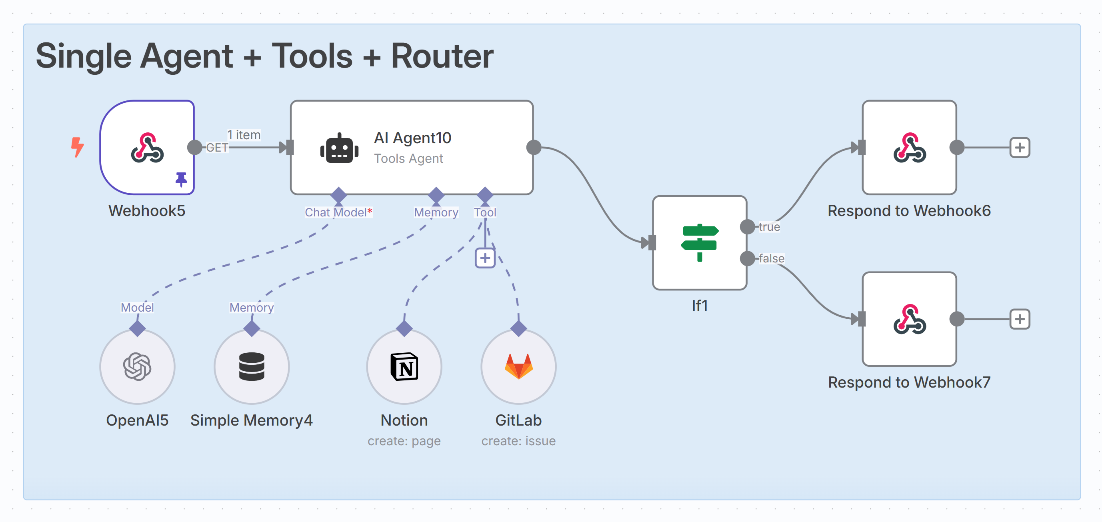
Core Components of an AI Agent

Perception
Reads data from APIs, UI, emails, documents, logs, sensorsReasoning Engine
Uses LLMs, ML models, rules, or hybrid logic to decide actionsMemory
Stores context, past actions, outcomes, and feedbackAction Layer
Calls APIs, fills forms, sends emails, triggers workflowsLearning Loop
Improves decisions using feedback and results
Single-Agent vs Multi-Agent Systems
Single AI Agent
Handles one workflow end-to-end
Example: Resume screening agent
Multi-Agent System
Multiple agents collaborate
Each agent has a role
Example:
Data Agent → Fetches data
Analysis Agent → Evaluates options
Execution Agent → Performs actions
Monitoring Agent → Tracks success
This mirrors real-world teams, not scripts.
Real-World Use Cases of AI Agents
1. Customer Support Automation
Understands customer intent
Checks history
Resolves issues or escalates intelligently
2. DevOps & IT Operations
Monitors logs and alerts
Diagnoses root causes
Executes fixes or rollbacks
3. Finance & Accounting
Invoice processing
Fraud detection
Payment reconciliation
4. HR & Recruitment
Resume screening
Interview scheduling
Offer generation
5. E-commerce Operations
Inventory forecasting
Dynamic pricing
Order exception handling
AI Agents + Automation = Hyperautomation
AI agents don’t replace automation — they enhance it.
RPA executes steps
AI agents decide which steps to execute
This combination leads to:
Fewer failures
Less manual intervention
Faster decision-making
Lower operational cost
Challenges to Watch Out For
AI agents are powerful, but not magic.
Control & Governance – Agents must have boundaries
Explainability – Decisions should be traceable
Security – Access control is critical
Over-automation risk – Not every decision should be autonomous
Smart organizations use human-in-the-loop models.
Future of AI Agents
The future isn’t “one big AI”.
It’s many specialized AI agents working together.
Soon, enterprises will have:
AI agents as teammates
AI agents owning KPIs
AI agents collaborating across departments
Automation will shift from task execution to decision execution.
Final Thoughts
AI agents represent the next maturity level of automation.
If traditional automation was about doing faster,
AI agents are about thinking better.
Organizations that adopt AI agents early will gain:
Speed
Intelligence
Resilience
Competitive advantage